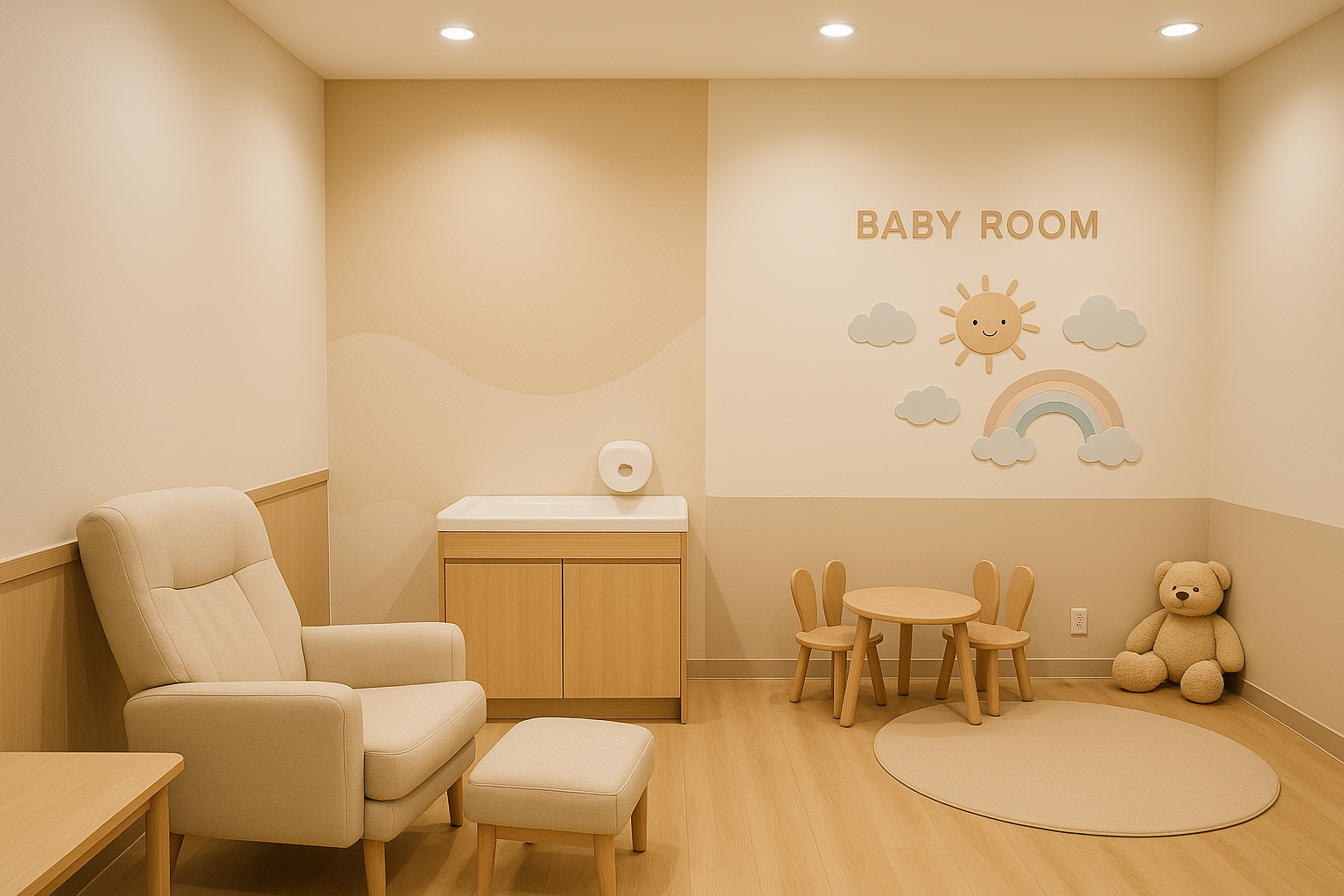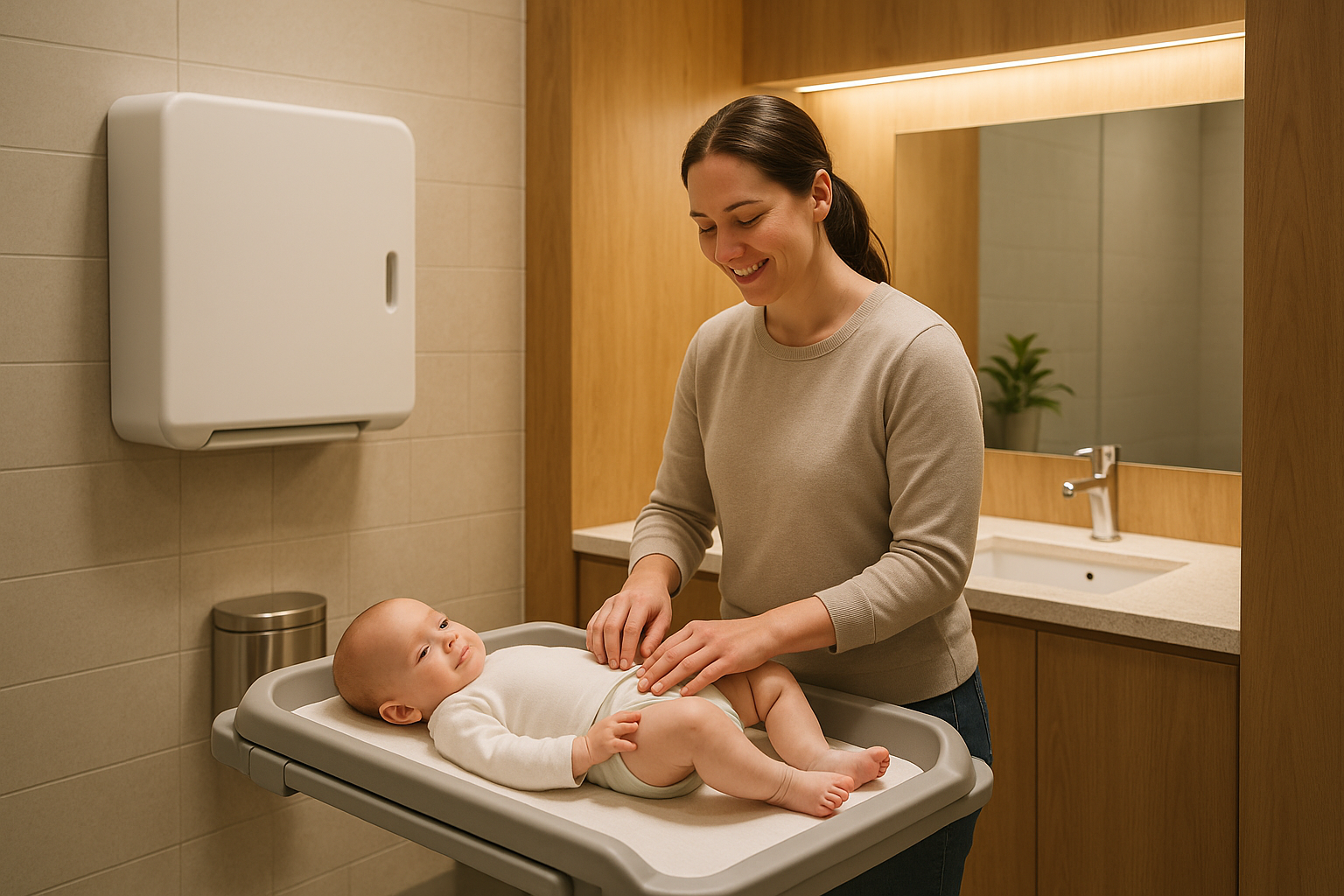
Visiting museums with babies often becomes a challenge due to inadequate diaper-changing facilities. Many museums lack proper setups, with only 2% of surveyed restrooms offering changing stations. Facilities are often poorly marked, cramped, or restricted to women’s restrooms, leaving male caregivers without options. Families with disabled children face even greater difficulties as standard tables fail to support older or heavier children. Poor cleanliness and maintenance further discourage usage, forcing parents to resort to unsafe or uncomfortable alternatives.
Key Takeaways:
- Limited Facilities: Most museums provide few or no changing stations, often hidden or inaccessible.
- Special Needs Challenges: Standard tables don’t accommodate larger children or those with disabilities.
- Cleanliness Issues: Dirty and poorly maintained restrooms deter families from using them.
- Solutions: Museums should add family rooms, improve signage, and ensure facilities are clean and accessible to all caregivers.
Parents can plan ahead using tools like BubbaMaps, which lists over 200 verified baby-friendly locations worldwide, offering real-time reviews and navigation. By addressing these issues, museums can create a more welcoming experience for families.
Common Problems with Museum Baby Changing Facilities
Missing or Poorly Marked Facilities
A major frustration for parents visiting museums is the lack of baby changing stations or clear signage to find them. A survey revealed that only 2% of 1,880 restrooms had changing stations, while 87% of 68 dining venues offered none at all [1]. This scarcity is echoed in museums, where parents often find themselves wandering through multiple floors in search of a station that might not even exist.
Even when changing stations are available, they’re often hidden away in women’s restrooms or tucked into accessible stalls, with no clear signage to guide visitors. This forces parents to embark on a scavenger hunt while juggling a crying baby. One mother shared the discomfort of using an accessible stall for diaper changes, leaving the door open to signal her apology to wheelchair users who needed the space. Others have reported resorting to hallway benches or even their cars for diaper changes due to the lack of proper facilities [1][4].
This problem goes beyond inconvenience - it highlights museums' broader shortcomings in accommodating families, especially those with unique needs.
Insufficient Facilities for Special Needs Families
The design of standard baby changing stations often falls short of meeting the needs of families with disabled children. Most tables are designed to hold up to 33 pounds (15 kg), roughly the weight of a two-year-old [2]. For children with disabilities who require specialized equipment like ceiling hoists, height-adjustable benches, or space for two caregivers, these standard tables are entirely inadequate. As a result, parents are forced to change their children on restroom floors, a practice that’s both unsanitary and physically risky, especially when handling children over 40 pounds (18 kg) [2].
Museum restrooms also fail to accommodate families with strollers, wheelchairs, or multiple children. One parent described the chaos of squeezing into a single stall with three kids, diaper bags, and no space to maneuver [1]. Families with twins face even greater struggles, as oversized strollers often can’t fit through narrow doorways. While UK law has mandated "Changing Places" facilities - including hoists and adult-sized benches - in new museum buildings since 2019, most U.S. museums are still far behind [2]. Even when accessible restrooms exist, they’re sometimes cluttered with cleaning supplies or storage items, rendering them unusable [5].
Poor Cleanliness and Maintenance
Cleanliness - or the lack thereof - is another common issue with museum baby changing facilities. Dirty tables, overflowing trash cans, and poorly maintained restrooms leave parents hesitant to use these spaces. When changing tables are grimy or missing safety straps, parents are forced to take risks, like changing their babies on countertops or restroom floors, which increases the chances of falls and exposure to germs [3].
Accessible restrooms are often repurposed for storage, with trash bins overflowing and surfaces coated in dirt, making them unappealing for families [5]. In some cases, parents have found facilities so poorly maintained that they opted to change their babies in parking lots instead. This neglect doesn’t just inconvenience families - it actively discourages them from visiting museums altogether, cutting visits short and reducing the likelihood of return trips [6].
Solutions to Improve the Baby Changing Experience
Planning Ahead as a Parent
When it comes to tackling the challenges of museum baby changing chaos, preparation is your best ally. Before heading out, take a moment to check the museum's website or app for maps that highlight baby changing station locations and their availability. For added insight, visit BubbaMaps (https://bubbamaps.com), a platform that features over 200 verified baby changing facilities and even offers turn-by-turn navigation. With verified locations, you can skip the guesswork and focus on enjoying your visit.
Make sure your diaper bag is stocked with essentials like a portable changing mat, extra diapers, wipes, and hand sanitizer - just in case the facilities aren't in top shape. It’s also smart to coordinate with your partner to share changing duties, cutting down on time spent in cramped restrooms. Timing your visit to avoid peak hours, especially on weekends, can also make a world of difference.
While parents can prepare for these challenges, museums also have a role to play in making the experience smoother for families.
Museum Facility Improvements
Museums need to view baby changing facilities as an essential visitor service, not an afterthought. To start, they should ensure clear and consistent signage with universal baby changing symbols at entrances, near restrooms, and on floor directories. Interactive maps that guide visitors to these facilities can also enhance the experience.
Equitable access is crucial. Installing baby changing stations in men’s, women’s, and all-gender restrooms ensures all caregivers are accommodated. Federal mandates set a baseline, but museums can go further by creating dedicated family rooms. These spaces should include full-sized changing tables, seating, and enough room for strollers.
For families with special needs, museums could incorporate Changing Places-style facilities. These setups, which are already a requirement in some new UK museum buildings since 2019, include height-adjustable benches, ceiling hoists, and extra space for caregivers [2][7].
Hygiene is another critical factor. Introducing hourly cleaning checks during busy times, along with clear checklists for sanitizing surfaces and restocking supplies, helps keep facilities clean and functional. Posting visible cleaning schedules can reassure visitors about the upkeep of these spaces. Finally, listing these well-maintained and accessible amenities on platforms like BubbaMaps makes it easier for parents to plan a stress-free visit.
How BubbaMaps Helps Parents Visit Museums
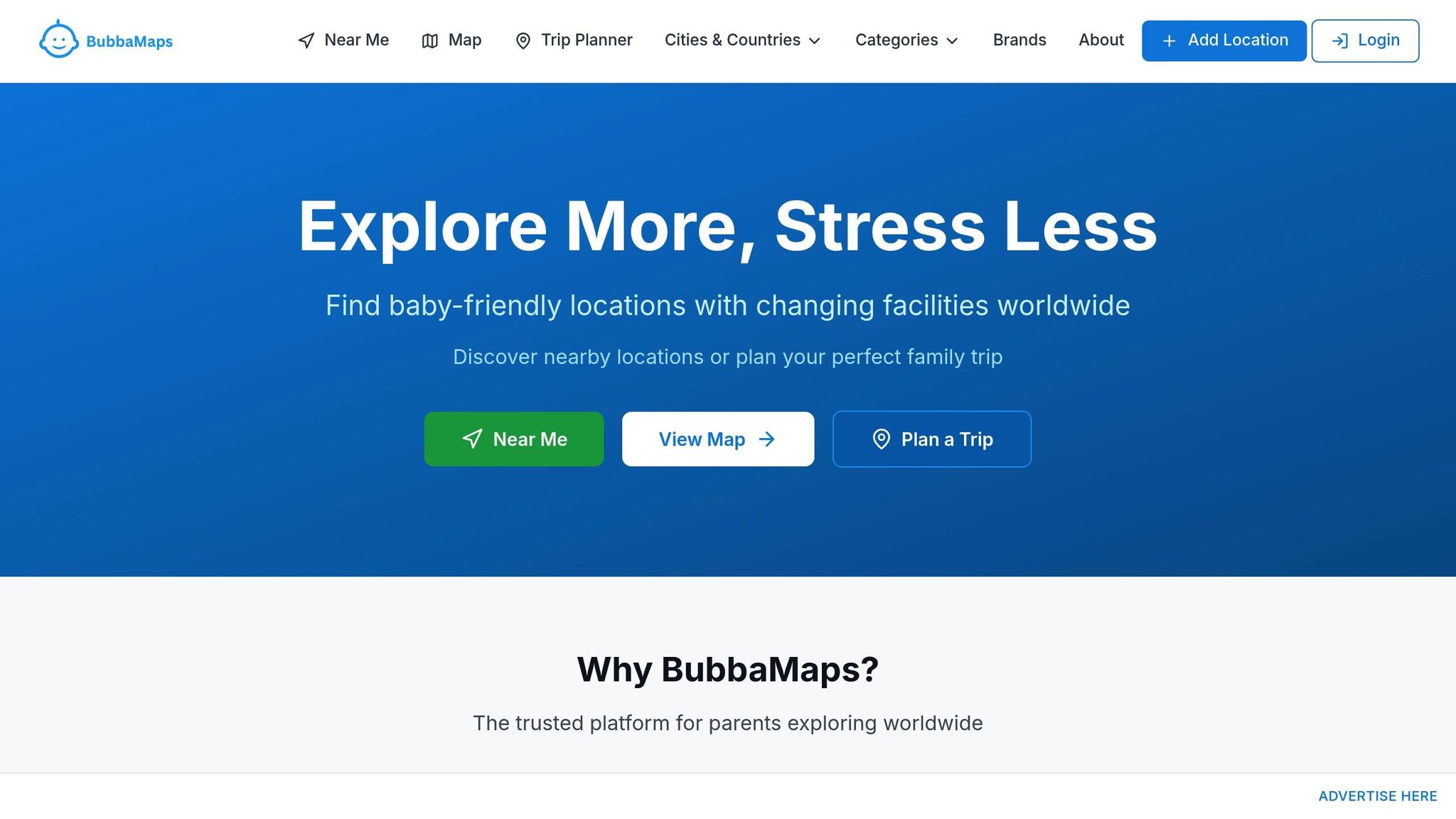
Navigating museums can be a challenge for parents, especially when it comes to finding clean and accessible baby changing facilities. That’s where BubbaMaps (https://bubbamaps.com) steps in to make life easier. This community-driven platform simplifies the search for baby-friendly spaces, providing parents with reliable, real-time information about over 200 verified locations worldwide. These include not just museums but also coffee shops, restaurants, and public spaces. Each listed facility is confirmed to have a dedicated, functional, and accessible baby changing surface, ensuring a smoother experience during your visit.
The BubbaMaps mobile app, available for both iOS and Android, takes convenience to the next level. It offers advanced filtering options and turn-by-turn navigation, guiding you straight from the museum entrance to the nearest verified facility. Plus, the app provides detailed information that many museum websites overlook, such as the availability of family restrooms, stroller-friendly access, and nursing areas.
What sets BubbaMaps apart is its emphasis on community insights. User reviews provide practical details about cleanliness, maintenance, and overall usability. For instance, reviews might mention whether a facility can accommodate double strollers or note if the changing table is only located in the women’s restroom. For families with children who have disabilities or special needs, these reviews can highlight features like extra space, benches, or enhanced accessibility options.
If the museum’s baby changing table is occupied or inconveniently located - such as being in a single-gender restroom - the app can direct you to alternative nearby options. This could be a café across the street or a public building with an all-gender restroom, turning a potential headache into a manageable detour and keeping your day on track.
Museums also stand to gain from BubbaMaps. By ensuring their facilities are accurately listed and monitoring user feedback, they can address issues like poor signage or infrequent cleaning. Engaging with these insights allows museums to improve their family-friendly offerings, making them more appealing to visitors with young children.
Typical vs. Better Baby Changing Setups in Museums
::: @figure 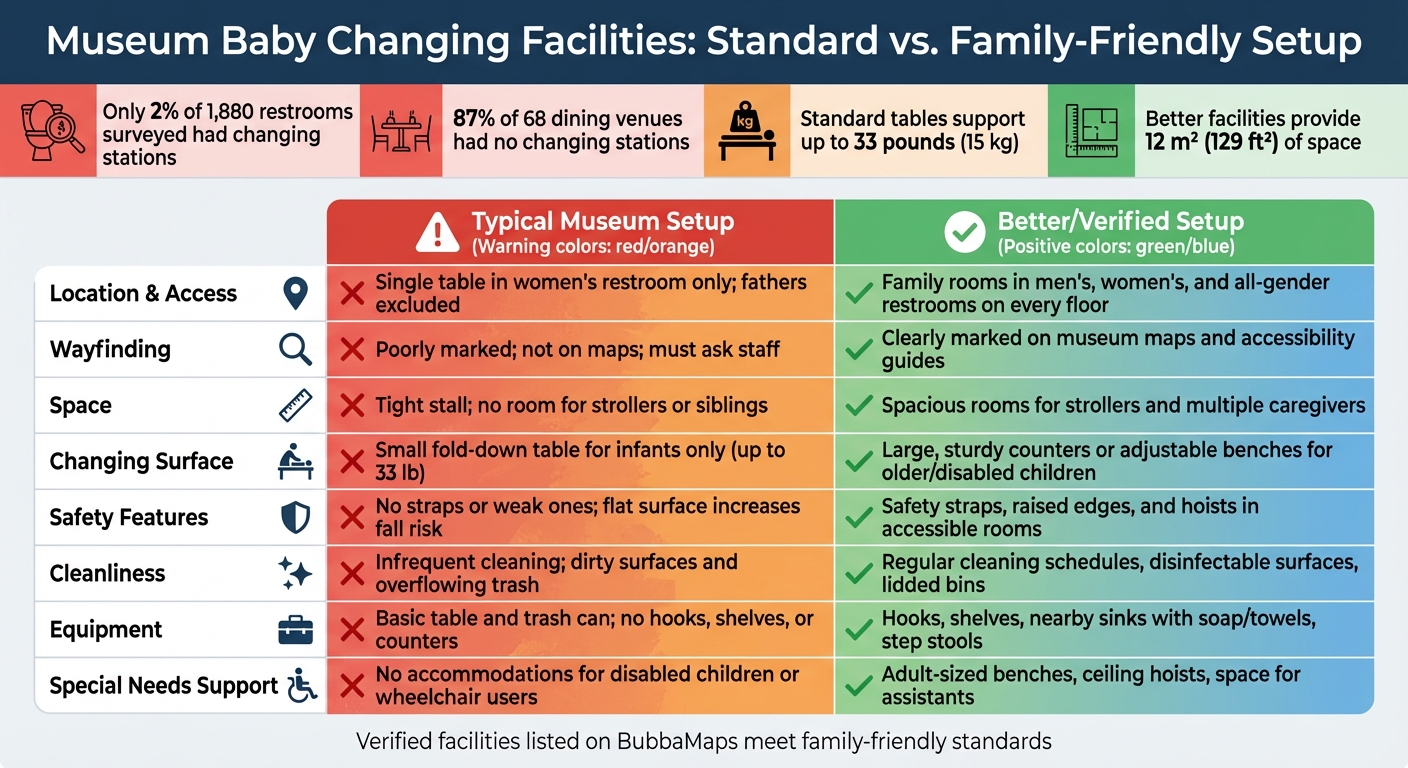 {Museum Baby Changing Facilities: Standard vs. Family-Friendly Comparison}
:::
When visiting museums with young children, the quality of baby changing facilities can make or break the experience. The difference between standard setups and more thoughtfully designed ones is huge, directly affecting how long families can stay and how comfortable the visit is for caregivers.
In most U.S. museums, baby changing setups are quite basic. A survey of over 1,880 restrooms revealed that only 2% had diaper-changing stations.[1] This lack of facilities extends to museums, where the typical setup is a single fold-down table found exclusively in women’s restrooms. These tables usually support up to 15 kg (around 33 pounds), which works for infants and very young toddlers but falls short for older children or those with disabilities.[2]
These standard setups also tend to lack important features. Safety straps are often missing or unreliable, cleaning is inconsistent, and there’s no space for diaper bags or siblings. A study of 68 nearby restaurants and eateries found that 87% lacked any diaper-changing station, and only a handful had stations in both men’s and women’s restrooms.[1] Museums frequently mirror these shortcomings.
On the other hand, better museum setups - like those verified through BubbaMaps - take a much more family-friendly approach. These facilities include dedicated family rooms or baby care areas located on multiple floors, with clear signage both on museum maps and near elevators. These rooms are spacious enough to fit a full-size stroller, multiple caregivers, and siblings. For families with disabled children, the best setups follow Changing Places standards, offering features like adult-sized, height-adjustable benches, ceiling track hoists, and around 12 m² (about 129 ft²) of maneuvering space.[2][10]
The table below highlights the key differences between typical setups and the enhanced features found in verified facilities.
Comparison Table: Standard Problems vs. Verified Solutions
| Feature | Typical Museum Setup | Better/BubbaMaps-Verified Setup |
|---|---|---|
| Location & Access | Single table in women’s restroom only; fathers left without options[1] | Family rooms in men’s, women’s, and all-gender restrooms on every floor[1][3][4] |
| Wayfinding | Poorly marked; not shown on maps; requires asking staff[1] | Clearly marked on museum maps, "plan your visit" pages, and accessibility guides[4][8] |
| Space | Tight stall; no room for strollers or siblings[1][4] | Spacious rooms that accommodate strollers and multiple caregivers[2][10] |
| Changing Surface | Small fold-down table for infants only; safe up to ~33 lb[2] | Large, sturdy counters or adjustable benches for older toddlers and disabled children[2] |
| Safety Features | No straps or weak ones; flat surface increases fall risk[3][4] | Safety straps, raised edges, and hoists in accessible rooms[2][3] |
| Cleanliness | Infrequent cleaning; dirty surfaces and overflowing trash[1][3] | Regular cleaning schedules, disinfectable surfaces, and lidded trash bins[3][4] |
| Equipment | Basic table and trash can; no hooks, shelves, or counters[1][3] | Hooks, shelves, nearby sinks with soap and towels, and step stools[2][4] |
| Special Needs Support | No accommodations for disabled children or wheelchair users[1][2] | Adult-sized benches, ceiling hoists, and space for assistants and large waste bins[2][9] |
Conclusion
Many museums in the U.S. still fall short when it comes to providing adequate baby changing spaces. Often, these facilities are limited, poorly marked, or gender-specific, leaving caregivers to come up with less-than-ideal solutions when nature calls [1]. For families with older children or those with special needs, the situation can be even more challenging. The absence of larger changing tables or specialized equipment like ceiling hoists often forces parents to cut their visits short or rely on makeshift arrangements [1].
Better facilities that are accessible and inclusive can make a big difference. They don’t just extend the length of family visits but also encourage repeat trips and positive word-of-mouth [1][3]. Museums that prioritize family-friendly features - such as adding family restrooms on multiple floors, clear and visible signage, and inclusive options like adjustable benches and hoists - align with broader accessibility goals. These efforts also reflect emerging standards like the BABIES Act, which requires diaper-changing stations in federal building restrooms [1][3]. Such updates help parents plan outings with greater confidence.
To make museum visits smoother, parents can take proactive steps. Check museum websites for information on family restrooms, call ahead to confirm amenities, and pack a small kit with essentials. For added convenience, tools like BubbaMaps can help locate community-verified changing facilities in museums and nearby spots. With its real-time reviews, navigation features, and mobile app, BubbaMaps simplifies planning, especially when facilities are crowded or tricky to find.
As museums continue to modernize, tools like BubbaMaps and community feedback play a key role in advocating for more family-centered designs. Celebrate museums that go the extra mile with their facilities, and don’t hesitate to share your experiences - positive or constructive. Together, parents and museums can create smoother, more enjoyable visits for all families.
FAQs
How can museums improve their baby changing facilities?
Museums can make their baby changing facilities more family-friendly by prioritizing cleanliness, privacy, and regular maintenance. Spacious stations that are easy to access and stocked with essentials like wipes, hand sanitizers, and proper disposal bins go a long way in meeting the needs of parents.
Adding clear signage ensures these areas are easy to locate, while consistent upkeep keeps them in top condition. Collecting visitor feedback is another smart way to identify and address any concerns quickly. These thoughtful touches can help museums create a more inviting environment for families.
How can BubbaMaps help parents find baby-friendly facilities in museums?
BubbaMaps simplifies outings for parents by providing a comprehensive map of over 200 verified baby-changing facilities in museums around the globe. With user reviews and built-in navigation features, you can quickly locate clean and convenient options. Available as a mobile app for both iOS and Android, it’s a handy tool for ensuring stress-free adventures with your baby.
What challenges do families with disabled children face when using museum baby changing facilities?
Families with disabled children frequently face challenges when it comes to baby changing facilities in museums. Many of these spaces are simply not designed to meet their needs - tables may be too small, placed in inconvenient locations, or unsuitable for children with mobility issues. On top of that, these areas often fail to accommodate mobility aids, such as wheelchairs or strollers, and lack the space needed for caregivers to assist their children comfortably.
These shortcomings can turn what should be an enjoyable outing into a stressful experience, making it harder for families to care for their children safely and with dignity. Museums can take meaningful steps to address this by providing larger, thoughtfully designed changing areas and ensuring their facilities are welcoming and accessible to all visitors.